
Services

Remote Patient Monitoring App Development

Real-Time Insight. Proactive Care. Scalable Solutions.

Remote Patient Monitoring apps Improve Clinical Care

Remote patient monitoring app development involves building mobile and web tools that collect patient data from connected devices, transmit it securely to care teams, and support remote patient monitoring software development across clinical workflows. Dogtown Media designs and develops custom RPM solutions as part of our mHealth app development work, helping healthcare providers track patient vitals, manage chronic conditions, and intervene early without requiring an in-person visit.

How Remote Patient Monitoring Apps Are Built

The architecture of a remote patient monitoring system combines remote patient monitoring software with a patient interface, a medical staff interface, an admin web panel, a connected device layer, cloud processing, and EHR/EMR integrations. Patients record or sync readings through mobile workflows, connected devices transmit data through secure channels, cloud services normalize and route that data, and care teams review alerts and trends inside clinical dashboards.

Patient Interface

The patient interface is where users pair devices, log symptoms, review care plans, receive reminders, and send updates between visits. This layer typically includes onboarding, medication reminders, educational content, secure messaging, and status views for blood pressure, glucose, pulse oximetry, weight, or other monitored metrics.

Medical Staff Interface

The medical staff interface gives clinicians, nurses, and care coordinators a structured view of incoming readings, alert thresholds, adherence status, symptom logs, and escalation tasks. It supports clinician dashboard workflows such as triage queues, patient review screens, note entry, and follow-up planning.

Admin Web Panel

The admin web panel supports program setup and operational control. Administrators can manage patient enrollment, user permissions, device assignments, care pathways, reporting rules, and monitoring thresholds while maintaining audit visibility across the platform.

The connected device layer can include Bluetooth blood pressure cuffs, glucometers, pulse oximeters, thermometers, smart scales, ECG patches, and other sensors. Cloud processing handles device ingestion, data validation, alert logic, storage, reporting, and audit trails. EHR and EMR integrations connect the RPM platform to provider systems so teams can exchange patient records, orders, and monitoring results without duplicating data entry.

Interface Primary Users and Core Functions Key Integrations
Patient Interface Patients use the app to pair devices, capture readings, complete symptom logs, confirm medications, and receive reminders. Bluetooth and WiFi devices, push notifications, secure messaging, and video visit tools.
Medical Staff Interface Clinicians, nurses, and care coordinators review trends, manage alerts, document interventions, and monitor adherence. EHR and EMR connections, clinician dashboards, reporting tools, and messaging systems.
Admin Web Panel Program administrators configure workflows, manage users and devices, set thresholds, and oversee reporting and audit controls. User management systems, analytics platforms, audit logs, and device management tools.

Development Workflow

  1. Discovery defines patient populations, monitoring goals, device requirements, compliance scope, and integration needs.
  2. UX and UI design maps patient journeys, clinician workflows, dashboard layouts, and alert logic.
  3. Development builds the mobile app, clinician tools, device connections, cloud services, and EHR or EMR integrations.
  4. QA and validation test usability, security, data accuracy, workflow reliability, and regulated documentation requirements.
  5. Deployment and post-launch support cover release management, onboarding, monitoring, updates, and ongoing optimization.

Remote Patient Monitoring App Features and Integrations

With rising demand for virtual care, RPM helps care teams monitor patients between visits, identify deterioration earlier, and reduce avoidable in-person follow-ups for chronic conditions such as heart disease, COPD, and diabetes. We develop RPM applications that integrate with EHRs, sync with wearable devices, and deliver patient insights to providers through a medical staff interface in real time.

RPM App Types We Build

Chronic Disease Management

Monitor long-term conditions through glucose monitoring, blood pressure tracking, pulse oximetry, medication adherence solutions, and daily symptom logs. Our apps can send medication reminders, flag out-of-range readings for clinician review screens, and visualize trends over time for earlier intervention.

  • Patients can log symptoms, confirm medications, and follow care plans inside the app.
  • Care teams can review adherence patterns, threshold alerts, and longitudinal vital data.
Post-Operative Recovery

Capture wound photos, pain scores, mobility milestones, temperature checks, and symptom reports after discharge. Integration with provider dashboards enables remote oversight, alert routing for infection risk or delayed healing, and recovery optimization without requiring every patient to return on-site.

  • Patients can submit wound images, pain updates, and mobility check-ins on a scheduled cadence.
  • Clinicians can review recovery data, compare progress against expected milestones, and trigger follow-up outreach.
Telemedicine-Enabled RPM

Combine RPM data with virtual visits through a patient interface that supports device sync, symptom intake, secure messaging, and pre-visit questionnaires. Clinicians can review recent vitals, annotate encounters, and adjust treatment plans inside dashboard workflows during or after telemedicine sessions.

  • Patients can complete symptom logs before appointments and send updates between visits.
  • Providers can review real-time readings, message patients securely, and document next steps from one screen.
Custom RPM Platforms

We design custom RPM platforms for specific provider requirements, including rare disease protocols, multilingual workflows, AI-powered risk scoring, hospital system integration, a configurable patient interface, and an admin web panel for enrollment, permissions, and program setup.

  • Programs can support condition-specific care pathways, escalation rules, and clinician review screens.
  • Operational teams can manage users, devices, thresholds, and reporting from centralized web controls.
Wearable Device Integration

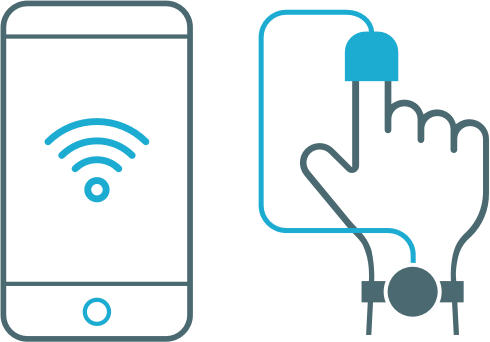
Sync apps with smartwatches, fitness trackers, ECG patches, and FDA-cleared wearables as part of our medical device app development work. Features can include sleep tracking, fall detection, real-time ECG monitoring, device pairing flows, background sync, and signal-quality checks.

  • Patients can pair approved devices, confirm successful sync, and view current wearable status in the app.
  • Care teams can review wearable data streams alongside alerts, trend views, and device connectivity status.
Benefits of Remote Patient Monitoring

Our RPM applications reduce monitoring gaps, support earlier intervention, and give providers clearer visibility into patient status between visits.

For Providers

  • Providers can review longitudinal vitals, symptom trends, and alert queues without waiting for the next in-person visit.
  • Clinicians can intervene earlier when readings, symptom logs, or adherence patterns show deterioration.

For Health Systems

  • Health systems can reduce avoidable readmissions and shift lower-acuity follow-up into remote workflows.
  • Organizations can standardize monitoring programs across locations with shared dashboards, device integrations, and reporting.

For Patients

  • Patients can capture readings at home, follow care plans more consistently, and stay connected to care teams through reminders and messaging.
  • People managing chronic or post-acute conditions can avoid unnecessary travel while still receiving timely follow-up.

RPM Compliance, Security, and Regulatory Readiness

Every RPM application we develop is engineered to meet stringent medical data regulations and security best practices.

Security Controls

  • We build HIPAA-compliant architecture for secure transmission and storage of protected health information.
  • We use end-to-end encryption, multi-factor authentication, role-based access controls, and audit logging to protect accounts and device data.
  • We conduct regular security audits, penetration testing, and patching cycles to keep RPM platforms resilient to emerging threats.

Regulatory Readiness

  • We use SaMD development frameworks that align with FDA and EMA guidance for software that performs medical functions.
  • We prepare 510(k)-ready documentation for device-connected RPM platforms. A 510(k) is the FDA submission used to show that a device is substantially equivalent to an existing legally marketed device.
  • We support 21 CFR Part 11 compliance for auditability, electronic signatures, and system validation. This FDA rule defines how electronic records and signatures must be controlled in regulated environments, includingclinical trial app development workflows.
  • We integrate with EHR and EMR systems through FHIR and HL7. FHIR is a modern API standard for exchanging healthcare data, and HL7 is a widely used messaging standard for moving information between clinical systems.

Why Dogtown Media for Remote Patient Monitoring App Development?

We build RPM platforms and patient monitoring platform solutions that connect medical devices, sync with EHR systems through FHIR and HL7, and support HIPAA- and FDA-aligned delivery requirements as part of our broader mHealth app development work. Our RPM experience spans:

Dogtown Media’s healthcare work includes SleepLife, an existing example of our experience building patient-facing digital health products in regulated care environments.

We support health system rollouts, specialty program deployments, and device-connected pilots, and we bring clinical, technical, and regulatory fluency to every stage of development.

If you need remote patient monitoring software development for a compliant patient monitoring platform with device connectivity, workflow alignment, and regulatory readiness built in, request a free consultation to discuss your mobile app project.

Remote Patient Monitoring App Development FAQ

Remote patient monitoring app development usually includes the patient app, clinician dashboard, admin controls, device connectivity, cloud processing, alert logic, reporting, and EHR or EMR integrations. It also includes security, compliance planning, testing, and deployment support.

Timeline depends on the number of user roles, connected devices, integrations, and regulatory requirements. A focused RPM build can move from discovery to launch in several months, while multi-role platforms with device validation and EHR integration usually take longer.

Common integrations include Bluetooth medical devices, wearable data feeds, EHR and EMR systems through FHIR and HL7, secure messaging, video visits, notifications, analytics, and user authentication services. Some programs also plan for adjacent models, such as remote therapeutics monitoring, when medication adherence or therapy response is part of the roadmap.

You make an RPM app HIPAA-compliant by protecting PHI in transit and at rest, limiting access by role, maintaining audit logs, validating vendors and hosting environments, and testing the platform regularly. Compliance also depends on workflow design, documentation, and operational controls, not just encryption alone.

A clinician dashboard should include patient lists, alert queues, trend views, symptom and adherence history, clinician review screens, device status, secure messaging, note capture, and escalation workflows. The goal is to help care teams review incoming data quickly and act on it without leaving the monitoring workflow.