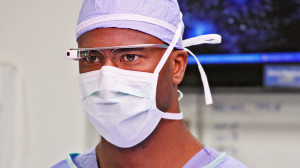
 While the new Google Glass wearable is still in its infancy, it is already proving to be a hit in the medical community. Beth Israel Deaconess Hospital in Boston recently completed a test run using Google Glass in its emergency department, and the reviews have been overwhelmingly positive. The hospital’s chief information officer, Dr. John Halamka, wrote, “I believe wearable computing will replace tablet-based computing for many clinicians who need their hands free and instant access to information.”
During the Beth Israel Deaconess experiment, Google Glass was used to help doctors access internal data while meeting with, assessing and treating patients. Halamaka noted that Google Glass was not only secure, but also “[differentiated] itself when it comes to real-time updates and notifications.” Google Glass performed particularly well when it was used in tandem with location services to access place-specific data.
In the future, clinicians are optimistic that Google Glass will help doctors access patient medical records immediately, securely and in real time. The device’s ability to record, store and share audio and video could also prove revolutionary, as it will give doctors groundbreaking new ways to chronicle thousands of medical conditions and their responses to treatment.
These future applications create a world of possibilities for Google Glass app development. While Google Glass is expected to make major inroads in the consumer market, it also has enormous potential in the fields of science and medicine, among many others.
Boston app development professionals interested in the medical applications of Google Glass can focus on finding ways to help overcome the technology’s current limitations.
Hands-free documentation is one area doctors have earmarked for development, as technologies like Google Glass could dramatically reduce patient wait times in the future. According to current estimates, documentation consumes as much as 50 percent of an ER doctor’s time. If documentation can be expedited, doctors will have more time to spend treating patients.