After reading this article, you’ll:
- Understand why the energy and utility sector is at an inflection point where mobile apps are no longer optional but essential for managing an aging workforce, integrating renewable energy sources, and meeting rising customer expectations in an industry projected to grow to $3.84 billion by 2033.
- Discover the specific types of mobile applications transforming utility operations — from field workforce management and predictive maintenance tools to customer-facing self-service portals and IoT-connected smart grid platforms — and how each delivers measurable ROI.
- Learn a practical roadmap for building and deploying mobile solutions that address the unique challenges of energy and utility companies, including compliance requirements, hazardous work environments, offline functionality needs, and integration with legacy infrastructure.
The energy and utilities sector is experiencing one of the most significant transformations in its history. Between an aging workforce heading into retirement, surging power demand driven by data centers and electric vehicles, a sweeping transition to renewable energy, and customers who expect the same seamless digital experiences they get from their banking apps — utility companies are under immense pressure to modernize. And at the center of this modernization effort sits a surprisingly powerful tool: the mobile app.
Mobile applications are rapidly becoming the operational backbone of the modern utility company. They’re putting real-time data into the hands of field technicians climbing power poles, giving grid operators instant visibility into network health, and empowering customers to manage their energy consumption from their couches. For an industry that has historically been slow to adopt new technology, the shift toward mobile-first operations is nothing short of revolutionary.
In this blog, we’ll explore how mobile apps are reshaping every facet of the energy and utilities industry — from field operations and workforce management to customer engagement and smart grid integration. We’ll look at the data driving this transformation, examine real-world use cases, and provide a practical framework for utility companies ready to embrace mobile app development as a strategic priority.
The State of the Energy and Utilities Workforce: A Sector at a Crossroads
Before diving into the mobile solutions transforming this industry, it’s important to understand the scale of the challenge utility companies are facing. The numbers paint a vivid picture.
The energy sector employs more than 8.5 million Americans, according to the U.S. Energy and Employment Report (USEER). Between 2021 and 2022, energy employment grew by 4 percent — outpacing the 3.1 percent growth rate of the overall U.S. workforce. That growth trajectory is expected to continue as the energy transition accelerates and new infrastructure comes online.
But here’s the tension: while the sector is growing, it’s simultaneously hemorrhaging institutional knowledge. The traditional energy workforce is aging, with baby boomers retiring in what the industry calls “the great crew change.” According to the Center for Energy Workforce Development (CEWD), 56 percent of current utility workers have fewer than 10 years of experience — a clear signal that legacy expertise is walking out the door and being replaced by a newer, less experienced workforce.
This talent crisis is further compounded by a staggering skills gap. Manpower’s 2024 research found that 76 percent of energy and utilities employers are experiencing a talent and skills gap within their existing workforce — six percentage points higher than the national average of 70 percent across all industries.
What does all of this mean for utility companies? It means that the tools and processes you hand your workforce matter more than ever. A less experienced field technician armed with the right mobile app — one that provides real-time work order data, asset histories, safety protocols, and AI-powered guidance — can operate with a level of competence and safety that previously took years to develop. Mobile apps don’t just make work more efficient; they compress the learning curve in an industry that can’t afford a slow ramp-up.
Why Mobile Apps Are No Longer Optional for Utility Companies
The utility industry has traditionally operated on paper-based processes, legacy software systems, and manual workflows. Field crews would receive printed work orders, drive to a job site with limited information about asset history, fill out paper forms, and bring those forms back to the office for data entry. The inefficiencies were enormous, but the model worked — or at least it was tolerable — when the pace of change was slow and the workforce was deeply experienced.
That model is now broken. Several converging forces are making mobile apps an operational imperative.
Surging Power Demand
Power consumption is setting records. The federal Energy Information Administration (EIA) predicts that U.S. power demand will reach 4,185 billion kilowatt-hours in 2025, driven by data centers, AI computing infrastructure, the electrification of transportation and buildings, and continued manufacturing growth. More demand means more infrastructure to build, maintain, and manage — and more pressure on already-stretched field crews to work faster and smarter.
The Renewable Energy Transition
Renewable energy sources like solar and wind are projected to account for 50 percent of the electricity market in 2025. Integrating these variable, distributed energy sources into the grid is extraordinarily complex. It requires real-time monitoring, bidirectional power flow management, and sophisticated demand response systems — all of which depend on mobile-accessible data and controls.
Rising Customer Expectations
Utility customers in 2025 don’t want to call a 1-800 number and wait on hold to report an outage or pay a bill. They expect self-service portals, real-time outage maps, push notifications about service disruptions, and personalized energy usage insights delivered to their smartphones. Meeting these expectations requires purpose-built customer-facing mobile applications.
Regulatory and Compliance Pressure
From NERC reliability standards to environmental compliance documentation, utilities operate in one of the most heavily regulated industries in the world. Mobile apps that digitize compliance workflows — automated safety checklists, geotagged inspection photos, time-stamped audit trails — significantly reduce the risk of violations while making regulatory reporting more efficient.
The Smart Grid Revolution
The global smart grid market was valued at approximately $66 billion in 2024 and is projected to grow to between $161 billion and $325 billion by 2033, depending on the forecast. This explosive growth is generating an equally explosive need for mobile applications that interface with Internet of Things (IoT) sensors, smart meters, distribution automation systems, and advanced metering infrastructure (AMI). Field workers need mobile tools that connect them to the smart grid in real time.
Mobile Apps for Field Workforce Management: Putting Power in the Palm of Your Technicians
The most immediate and impactful application of mobile technology in the utility sector is empowering field workers. Utility field technicians — the linemen, meter readers, pipeline inspectors, and substation workers who keep the lights on — are inherently mobile. They work across vast geographic territories, often in hazardous environments, and need access to data and systems that have historically been locked inside office-based software.
Modern mobile workforce management (MWM) solutions are purpose-built to address the unique requirements of utility field operations. Here’s what that looks like in practice.
Real-Time Work Order Management
Instead of printed work orders or radio dispatches, field technicians receive work orders directly on their mobile devices with all relevant context: asset location on a map, equipment history, required parts and materials, safety procedures, and customer information. When they complete the work, they close out the order on their device, and the data syncs immediately to the back-office systems — no paperwork, no re-keying, no delays.
Digital Data Collection and Inspection
Paper forms are the enemy of data quality. They get lost, they’re difficult to read, and they create a lag between data collection and data availability. Mobile apps replace paper with digital forms that can include drop-down menus, mandatory fields, photo capture, barcode scanning, GPS tagging, and digital signatures. For example, a large Texas-based utility company replaced its paper-based transformer installation process with a mobile app that uses barcode scanning to complete end-to-end installations. Field crews reported the digital process was “ten times easier” and significantly reduced data entry errors.
GPS Tracking and Intelligent Dispatching
When outages strike or emergencies occur, every minute counts. Mobile workforce apps with GPS tracking let dispatch centers see exactly where every crew is located in real time, enabling intelligent assignment of the nearest available crew to urgent jobs. This reduces response times, optimizes travel routes, and ensures the right crew with the right skills gets dispatched to the right job.
Offline Functionality
Utility field work often takes place in remote areas with poor or no cellular connectivity. A mobile app that stops working when the signal drops is useless in the field. The best utility mobile solutions are designed with robust offline capabilities — allowing technicians to access work orders, view asset data, capture inspection results, and complete forms even without a connection. Data syncs automatically when connectivity is restored.
Safety and Compliance
Working around live power lines, pressurized gas mains, and confined spaces is inherently dangerous. Mobile apps enhance safety by delivering digital safety briefings, requiring completion of pre-job safety checklists, providing hazard alerts based on the specific asset being serviced, and enabling instant incident reporting. This creates a documented safety culture that protects workers and satisfies regulators.
IoT Integration: Connecting Mobile Apps to the Smart Grid
The Internet of Things is transforming the energy and utility landscape in profound ways. IoT sensors deployed across the grid generate massive volumes of real-time data about everything from transformer temperatures to water pressure levels to gas pipeline integrity. But all of that data is only useful if it reaches the people who need it, when they need it. That’s where mobile apps come in.
Smart Meter Management
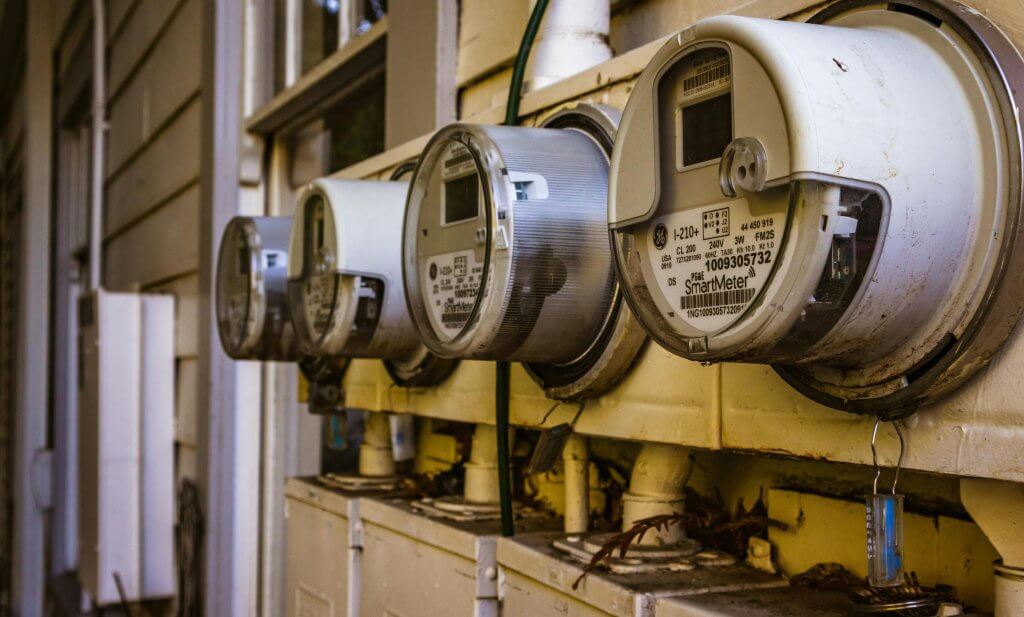
Smart meters are the foundation of the modern utility-customer relationship. They track utility energy consumption through IoT technology, enabling remote monitoring, automated billing, and real-time usage analytics. According to Microsoft’s IoT Signals research, 37 percent of power and utilities organizations adopt IoT specifically for workplace safety benefits. Mobile apps that interface with smart meter data give both utility workers and customers unprecedented visibility into energy consumption patterns.
For field technicians, mobile smart meter apps mean they can remotely diagnose meter issues, verify installations, and run diagnostic tests without making a physical trip — saving time and reducing truck rolls. For customers, companion apps that pull smart meter data provide real-time energy usage dashboards, bill forecasting, and conservation recommendations.
Predictive Maintenance
One of the most powerful applications of IoT and machine learning in utilities is predictive maintenance. IoT sensors continuously monitor the condition of critical assets — transformers, circuit breakers, distribution lines, pumps, and valves — and feed that data to AI algorithms that detect patterns indicating impending failure. When an anomaly is detected, the system generates a mobile alert to the appropriate field crew, complete with the asset’s location, condition data, and recommended maintenance procedures.
This shifts the maintenance paradigm from reactive (fix it when it breaks) to proactive (fix it before it breaks). The result is fewer unplanned outages, extended asset lifespans, reduced maintenance costs, and improved grid reliability. Predictive maintenance is one of the key advantages the industry can harness through digital transformation, with sensor-driven data helping workers identify assets on the verge of failure so they can use their time more efficiently.
Outage Detection and Restoration
When storms or equipment failures cause outages, smart grid sensors can detect the problem in real time, automatically isolate the affected section to prevent cascading failures, and push detailed outage information to field crews through mobile apps. Crews arrive on-site already knowing the scope of the problem, the affected equipment, and the restoration steps required. This dramatically accelerates outage restoration times and reduces customer impact.
Environmental Monitoring
Utility companies are increasingly required to monitor their environmental impact in real time. IoT-connected mobile apps can track emissions, water usage, noise levels, and other environmental parameters at generation and distribution facilities, providing instant alerts if readings exceed regulatory thresholds.
Customer-Facing Mobile Apps: Redefining the Utility-Customer Relationship
The utility industry has long been known for one-directional communication: the utility sends a monthly bill, and the customer pays it. But modern customers — especially the digitally native millennials and Gen Z consumers who are forming an increasingly large share of the customer base — expect much more. They want the same kind of seamless, personalized, self-service digital experience they get from their bank, their airline, and their favorite retailer.
Customer-facing mobile apps are the primary vehicle for delivering this experience. Utility companies are beginning to develop phone applications that allow customers to monitor and manage their usage in real time, and the most effective ones include several key features.
Real-Time Usage Monitoring
Connected to smart meters and IoT infrastructure, customer apps display energy, water, or gas consumption in near real-time. Customers can see how much energy their home is using right now, compare today’s usage to yesterday’s, identify which times of day are most expensive, and set usage alerts. This transparency empowers customers to make informed decisions about their consumption habits.
Self-Service Account Management
Mobile apps allow customers to pay bills, set up autopay, start and stop service, update account information, report outages, and schedule service appointments — all without calling customer service. This reduces call center volume, lowers operational costs, and delivers the instant gratification that modern consumers expect.
Outage Communication
During outages, customers want to know three things: Does the utility know about the problem? What caused it? When will power be restored? Mobile apps with integrated outage maps, push notifications, and estimated restoration times transform the outage experience from frustrating uncertainty to informed patience. Many utilities now use AI-powered chatbots within their apps to handle outage inquiries automatically, further reducing the burden on customer service teams.
Personalized Energy Insights
Advanced customer apps use artificial intelligence to analyze a household’s energy consumption patterns and provide personalized recommendations for reducing usage and saving money. These might include suggestions to adjust thermostat settings, shift energy-intensive activities to off-peak hours, or invest in specific energy-efficient appliances. Some apps gamify conservation, offering rewards or badges for hitting savings targets.
Demand Response Programs
As utilities increasingly need customers to shift their energy consumption to match variable renewable generation, mobile apps become the interface for demand response programs. Customers can opt into programs that automatically adjust their smart thermostat or EV charger during peak demand periods in exchange for bill credits. The app provides transparency about when adjustments are happening and how much the customer is saving.
AI and Machine Learning: The Intelligence Layer for Utility Mobile Apps
If IoT sensors are the nervous system of the modern utility, then AI and machine learning are the brain. And mobile apps are how that intelligence gets delivered to the humans — both employees and customers — who act on it.
AI is powering several critical capabilities within utility mobile applications.
Intelligent Dispatch and Routing
AI algorithms analyze real-time data on crew locations, skills, equipment, traffic conditions, and job priorities to optimize dispatching decisions. The mobile app presents field supervisors with AI-recommended crew assignments that minimize response times and maximize first-time fix rates.
Anomaly Detection
Machine learning models trained on historical grid data can detect subtle patterns that indicate equipment degradation, energy theft, cyber intrusions, or other anomalies that human operators would miss. When anomalies are detected, mobile alerts are pushed to the appropriate personnel with contextual information and recommended actions.
Natural Language Processing for Customer Service
AI-powered chatbots embedded in customer-facing mobile apps use natural language processing to understand and respond to customer inquiries in conversational language. These chatbots can handle a wide range of common requests — from billing questions to outage reports to service scheduling — without human intervention.
Computer Vision for Field Inspections
Emerging applications use the mobile device’s camera combined with computer vision AI to assist field technicians with inspections. A technician can point their phone at a transformer, and the app identifies the equipment model, overlays maintenance history, highlights areas that need attention, and even detects visual defects like corrosion, overheating, or damaged components.
Augmented Reality: The Next Frontier for Utility Field Work
While still in early adoption, augmented reality (AR) is showing tremendous promise for utility field operations. AR overlays digital information onto the physical world through a mobile device’s camera or wearable headset, creating powerful new capabilities for field workers.
Remote Expert Assistance
When a field technician encounters an unfamiliar piece of equipment or a complex repair scenario, AR enables remote experts to see what the technician sees through their mobile camera and overlay visual instructions — arrows pointing to specific components, annotated diagrams, step-by-step procedure highlights — directly onto the technician’s view. This dramatically reduces the need for specialist travel and accelerates problem resolution.
Subsurface Visualization
One of the most dangerous aspects of utility field work is the risk of striking buried infrastructure — gas lines, water mains, fiber optic cables, electric conduit. AR apps that integrate with GIS data can overlay the locations of buried utilities onto the real-world view through the technician’s phone or tablet, providing a visual map of what lies beneath the surface before any digging begins.
Training and Onboarding
For an industry struggling to replace retiring expertise, AR-based training applications offer a compelling solution. New workers can practice procedures on virtual equipment overlaid onto real-world environments, receive guided step-by-step instructions during actual field work, and access interactive 3D models of complex equipment — all through their mobile device. This accelerates the onboarding process and reduces the risk of errors during the critical early months on the job.
Building a Utility Mobile App: Key Considerations and Best Practices
For utility companies ready to invest in mobile app development, the path from concept to deployment involves several critical decisions and considerations that differ from typical consumer or enterprise app projects.
1. Define the Problem Before Choosing the Technology
The most common mistake utility companies make is starting with the technology — “We need an app” — rather than starting with the problem. Begin by identifying the specific operational pain points, efficiency gaps, or customer experience deficiencies you want to address. Is it reducing truck rolls? Improving first-time fix rates? Lowering call center volume? Accelerating outage restoration? The clearer the problem definition, the more focused and effective the solution.
This principle aligns with a broader app development truth: before writing a single line of code, clarify what you want your app to accomplish and derive specific, measurable objectives from that vision.
2. Prioritize Offline-First Architecture
Unlike a restaurant ordering app that can assume constant connectivity, utility mobile apps must function reliably in environments with intermittent or no cellular service. This means designing an offline-first architecture where the app stores essential data locally, allows full functionality without a connection, and intelligently syncs changes when connectivity is restored. This is non-negotiable for field operations apps.
3. Integrate with Legacy Systems
Most utility companies operate a complex ecosystem of legacy systems — geographic information systems (GIS), outage management systems (OMS), enterprise asset management (EAM), customer information systems (CIS), and SCADA systems, among others. A mobile app that exists in isolation from these systems creates data silos and duplicate work. Effective utility mobile apps are deeply integrated with existing backend systems through APIs and middleware layers.
4. Design for Harsh Conditions
Field technicians use mobile devices in rain, snow, extreme heat, and direct sunlight. They wear heavy gloves. They work at heights. The app’s user interface needs to be designed for these conditions — large touch targets, high-contrast displays, voice-activated controls, and simple navigation that can be operated with one hand or with gloves on.
5. Build Security Into the Foundation
Utility companies are critical infrastructure targets for cyberattacks. Mobile apps that connect to grid management systems, customer databases, and SCADA networks must be built with enterprise-grade security from the ground up — encrypted data transmission, secure authentication (including biometric), role-based access controls, remote wipe capabilities, and compliance with NERC CIP (Critical Infrastructure Protection) standards.
6. Plan for Scale and Evolution
The energy sector is changing rapidly. Today’s mobile app needs to accommodate tomorrow’s technologies — whether that’s new IoT sensor types, updated smart grid protocols, or emerging AI capabilities. Choose a technology platform and development partner that can scale with your needs and adapt to the industry’s evolution. The first 90 days after launch are critical for gathering user feedback and iterating — but planning for long-term evolution starts before you write the first line of code.
7. Partner with Experienced Developers
Building a utility mobile app isn’t a typical development project. It requires deep understanding of industry workflows, regulatory requirements, safety protocols, and the specific technical challenges of the sector. Partner with a mobile app development company that has experience building enterprise-grade, industry-specific applications and can navigate the complexity of utility operations.
The ROI of Mobile Apps for Utility Companies
Utility executives rightly want to understand the return on investment before committing to a mobile app initiative. While specific ROI figures vary by organization and use case, the benefits consistently fall into several quantifiable categories.
Reduced Operational Costs
Digital work orders and mobile data capture eliminate paper-based processes, reduce data entry errors, and minimize duplicate work. Intelligent dispatching reduces unnecessary truck rolls and optimizes route efficiency. Predictive maintenance avoids costly emergency repairs. Together, these efficiencies typically deliver significant operational cost savings.
Improved Workforce Productivity
Field technicians equipped with mobile apps spend less time on administrative tasks — filling out forms, searching for information, calling the office for clarification — and more time on productive field work. Studies consistently show that mobile-enabled field workers complete more jobs per day with higher first-time fix rates.
Enhanced Customer Satisfaction
Self-service mobile apps reduce call center volume while simultaneously improving customer satisfaction. Customers who can check their balance, report an outage, and track restoration progress from their phone are measurably happier than those stuck on hold waiting for a customer service representative.
Faster Outage Restoration
The combination of smart grid sensors, AI-powered analytics, and mobile workforce apps accelerates every phase of outage restoration — from detection to dispatch to repair to verification. For utilities where regulatory penalties are tied to outage duration metrics (SAIDI, SAIFI, CAIDI), faster restoration directly impacts the bottom line.
Regulatory Compliance
Digitized inspections, automated audit trails, and time-stamped compliance documentation significantly reduce the risk of regulatory violations and the associated fines. They also dramatically reduce the time and effort required to prepare for regulatory audits.
Looking Ahead: The Future of Mobile in Energy and Utilities
The mobile transformation of the utility sector is still in its early chapters. Several emerging trends promise to accelerate and deepen the impact of mobile technology in the years ahead.
5G Connectivity will eliminate many of the bandwidth and latency limitations that currently constrain mobile applications in the field, enabling real-time video streaming, AR/VR applications, and instant data synchronization even in remote areas.
Edge Computing will allow data processing to occur directly on mobile devices or nearby edge nodes rather than in distant cloud data centers, enabling faster decision-making for time-critical grid operations.
Digital Twins — virtual replicas of physical grid assets — will become increasingly accessible through mobile interfaces, allowing field workers to interact with a digital model of a substation or distribution network before, during, and after physical maintenance.
Generative AI will create intelligent mobile assistants that can answer field technicians’ questions in natural language, generate work procedures on the fly, and provide contextual guidance based on the specific asset and conditions at hand.
Autonomous Drones integrated with mobile apps will perform aerial inspections of transmission lines, wind turbines, and solar arrays, streaming real-time video and sensor data to field workers’ mobile devices.
The utility companies that embrace these technologies earliest — and build the mobile platform foundations to support them — will enjoy significant competitive advantages in operational efficiency, workforce effectiveness, customer satisfaction, and grid reliability.
The energy and utilities sector is at a pivotal moment. An aging workforce, surging demand, the renewable energy transition, and rapidly evolving customer expectations are converging to create both immense challenges and extraordinary opportunities. Mobile apps sit at the nexus of these forces, offering utility companies a practical, proven, and powerful tool to modernize operations, empower workers, delight customers, and build the smart, resilient grid of the future.
The question is no longer whether utility companies should invest in mobile app development. The question is how quickly they can move to capture the operational and competitive advantages that mobile technology delivers. Those that act decisively will lead the industry’s transformation. Those that wait will find themselves struggling to catch up in an industry that, for the first time in its history, is moving very fast.
Frequently Asked Questions (FAQ)
What types of mobile apps do utility companies need most?
Utility companies typically benefit from three categories of mobile applications: field workforce management apps that empower technicians with real-time work orders, asset data, and digital inspections; customer-facing self-service apps that enable bill payment, usage monitoring, and outage reporting; and IoT-connected operational apps that interface with smart grid infrastructure, smart meters, and predictive maintenance systems. The right mix depends on the company’s most pressing operational challenges and strategic priorities.
How do mobile apps work in areas without cellular connectivity?
The best utility mobile apps are built with an offline-first architecture, meaning they store essential data locally on the device and allow full functionality — including viewing work orders, capturing inspection data, and completing forms — without an internet connection. When the technician returns to an area with connectivity, the app automatically syncs all data captured during the offline period to the backend systems. This is a non-negotiable design requirement for any serious utility field operations app.
What is the typical ROI timeline for a utility mobile app?
ROI timelines vary based on the scope of the application and the specific pain points it addresses, but most utility companies see measurable returns within six to twelve months of deployment. Cost savings from reduced paperwork, fewer truck rolls, faster outage restoration, and lower call center volume are typically among the earliest and most quantifiable benefits. Longer-term returns come from improved asset lifespans through predictive maintenance, reduced regulatory fines, and enhanced customer retention.
How do utility mobile apps integrate with existing legacy systems?
Integration is achieved through APIs (Application Programming Interfaces) and middleware layers that connect the mobile app to the utility’s existing ecosystem of backend systems — including GIS, OMS, EAM, CIS, SCADA, and billing systems. A well-architected mobile platform uses a secure integration layer that normalizes data formats, manages authentication, and ensures real-time or near-real-time data synchronization between the mobile app and enterprise systems.
What security measures are required for utility mobile apps?
Utility mobile apps must meet rigorous security standards given the critical infrastructure nature of the industry. Essential security measures include end-to-end data encryption (both in transit and at rest), multi-factor authentication including biometric options, role-based access controls, remote device wipe capabilities, application-level firewalls, regular penetration testing, and compliance with NERC CIP (Critical Infrastructure Protection) standards. Security auditing and penetration testing should be an ongoing practice, not a one-time event.