Key Takeaways:
- In several large cohorts, roughly half of patients stop GLP-1 therapy within a year. Discontinuation starts early and continues steadily through the year, but side effects, titration stalls, and mismatched expectations all concentrate in the dose-escalation period, which makes escalation the highest-value design target for a companion app.
- The business case comes from the organizations paying for the drug. Business Group on Health found that 45% of surveyed large employers require participation in a weight management program to receive GLP-1 coverage, and 69% validate eligibility with biometric data. Those requirements favor companion apps connected to the care team and the payer over standalone trackers.
- The evidence that apps improve GLP-1 outcomes is promising but mostly observational. Companies that build rigorous measurement into the product from day one will have something payers can actually evaluate, and most of the market won’t.
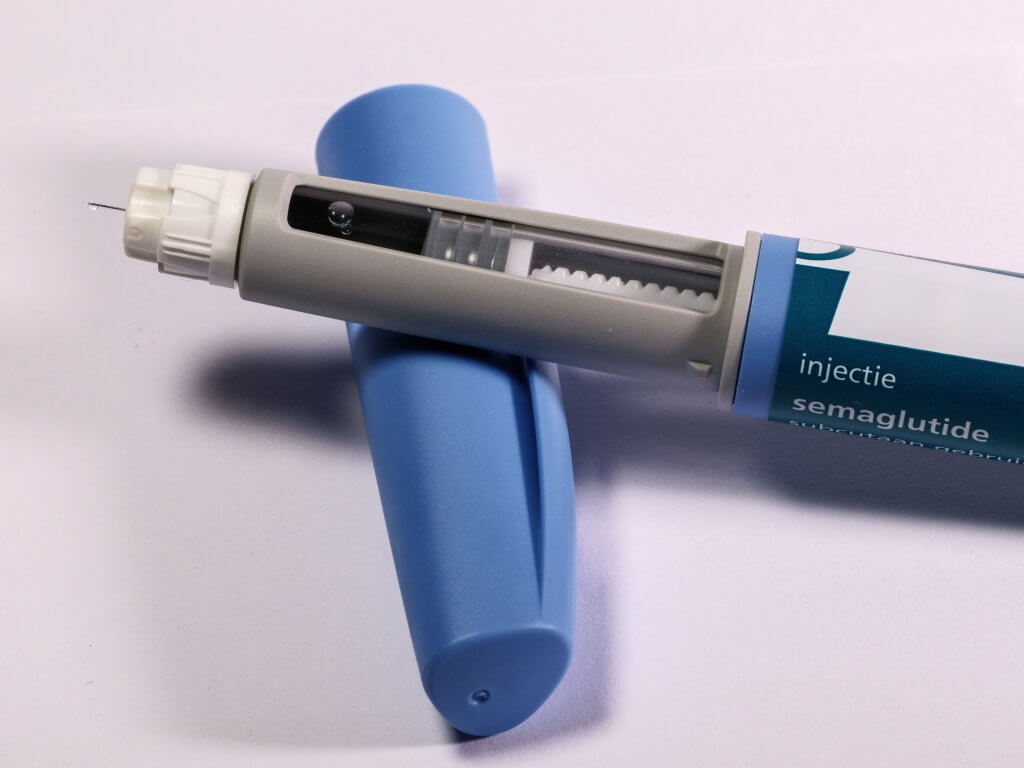
GLP-1 medications work. In clinical trials, semaglutide produced average weight loss near 15% and tirzepatide up to about 21% at its highest dose, and few participants stopped because of side effects: in STEP 1, 4.5% of participants on semaglutide discontinued treatment due to gastrointestinal events, against 0.8% on placebo.
Real-world programs look different. Half of patients stop within a year in several large cohorts, many before they ever reach a maintenance dose, and the ones who stop tend to regain weight. Most of that gap opens up around the drug: a side effect nobody helped the patient manage, a refill that lapsed, a dose step that never happened.
That gap is where companion apps come in, and it’s also where most of them fall short. App stores already carry a crowded field of consumer GLP-1 trackers that log injections and chart weight. Very few connect to a care team, catch the side effects that drive discontinuation, or produce the persistence data an employer or health plan needs before renewing coverage.
This guide covers what it takes to build the version that matters: the adherence architecture, the side-effect tracking that functions as a clinical instrument, the safety obligations specific to weight-loss medications, and the regulatory line that separates a companion app from a medical device. It’s written for businesses running or building weight-loss programs, including telehealth providers, employers, health plans, health systems, and digital health companies.
The Market Has Changed Faster Than Most Programs
Adoption is broad and still climbing. KFF’s Health Tracking Poll, fielded in late October and early November 2025, found that 12% of US adults were currently taking a GLP-1, double the share from May 2024, with 18% having used one at some point. Use peaks at 22% among adults aged 50 to 64.
Affordability remains the friction point. In the same poll, 56% of GLP-1 users said the drugs were difficult to afford, including 55% of those with insurance.
Since late 2025, the market has shifted in ways that change what a companion app needs to handle.
Oral options arrived. FDA approved the Wegovy pill, an oral form of semaglutide, on December 22, 2025, and Novo Nordisk launched it in early January 2026 with a starting dose at $149 a month for self-pay patients. On April 1, 2026, FDA approved Eli Lilly’s Foundayo (orforglipron), the first new molecular entity cleared under the agency’s National Priority Voucher program, just 50 days after filing. Unlike oral semaglutide, which requires an empty stomach and limited water, Foundayo can be taken at any time of day without food or water restrictions. A program can now have patients on weekly injections, a daily pill with a fasting protocol, and a daily pill without one, all at once.
Manufacturers moved closer to the patient. Direct-to-consumer cash-pay channels like LillyDirect and NovoCare, along with the TrumpRx portal launched in early 2026, brought cash prices for brand-name GLP-1s into a range of roughly $149 to $449 a month depending on product and dose, with Zepbound’s higher doses at the top of that range. Whoever owns the patient relationship between prescription and refill now has a real opportunity, and a real responsibility.
Compounding is contracting. FDA removed tirzepatide from the drug shortage list in December 2024 and semaglutide in February 2025, and in April 2026 the agency proposed ending most remaining compounding of semaglutide, tirzepatide, and liraglutide, citing no clinical need. Programs built on compounded supply face a structural transition, and a companion app designed around one supply model will need rework.
Why Patients Stop
Persistence data varies by population and by definition, which is worth understanding before you set any target.
A nationwide Danish study presented at the 2025 European Association for the Study of Diabetes meeting followed 77,310 adults without diabetes who started semaglutide for weight loss. Within a year, 52% had discontinued, with 18% gone by three months, 31% by six, and 42% by nine. Younger adults were the most likely to stop. A larger 2026 Danish analysis of 157,822 adults found a similar one-year figure of 49%, with discontinuation accumulating at a fairly steady pace: 13% by three months, 27% by six, and 39% by nine.
US data tells a similar story with an important trend. Prime Therapeutics’ widely cited 2023 analysis found only 32% of members without diabetes were still on therapy at one year, and a follow-up found 15% at two years. Prime’s later analysis showed one-year persistence climbing from 33.2% among 2021 starters to 62.7% among early 2024 starters, with tirzepatide near 63% to 64% for its 2023 and 2024 starters. The often-quoted “only one in three stay on” figure is out of date. Persistence has improved materially as supply stabilized and prescribing matured.
Other cohorts land in between. Among 7,493 Medicaid members in Massachusetts, six-month persistence was 60.8% and adherence was 60.1%, with lower rates among men, adults under 40, and members without weight-related comorbidities. In a multidisciplinary academic obesity clinic where the drug cost patients nothing, median persistence was 10.7 months and half had stopped by twelve.
The definition matters as much as the population. A 2026 analysis found twelve-month persistence of 32.8% using a 30-day allowable gap between fills, 38.9% with a 45-day gap, and 51.0% with a 90-day gap. Same patients, three different answers. Any program reporting persistence to a payer needs to state its definition, and any program comparing itself to a published benchmark needs to match it.
The causes cluster in a few places.
Side effects. Gastrointestinal adverse events are common and tied to dose escalation. In STEP 1, one of the phase 3 trials behind semaglutide’s obesity approval, 74.2% of participants on the drug reported gastrointestinal effects. A pooled analysis of STEP 1 to 3 found nausea in 43.9% of semaglutide participants, diarrhea in 29.7%, vomiting in 24.5%, and constipation in 24.2%. Prevalence peaked around week 20, shortly after participants reached the full dose, then declined, and most gastrointestinal discontinuations happened during escalation.
Tirzepatide trials show the same pattern, with gastrointestinal events mostly transient and concentrated during dose escalation. In a US cohort of 125,474 patients analyzed by Rodriguez and colleagues, moderate or severe gastrointestinal adverse events were associated with a 19% higher hazard of discontinuation among patients without type 2 diabetes, and a 38% higher hazard among those with it.
Cost. The lead researcher on the Danish study pointed to financial constraints, alongside side effects, as drivers of discontinuation. In the Rodriguez cohort, higher income was associated with lower discontinuation among patients with type 2 diabetes. Coverage denials, prior authorization lapses, and cash-pay burden push patients off therapy regardless of how well the drug is working.
Expectations. In the Rodriguez cohort, each additional percentage point of weight lost was associated with a 3.3% lower hazard of stopping among patients without diabetes. Patients who see results tend to stay, while those expecting trial-level results in the first month, during low-dose titration, often decide the drug isn’t working and quit before it has a chance to.
Titration friction. In the academic clinic cohort, only 23% of semaglutide users reached the 2.4 mg dose and 28% of tirzepatide users reached 15 mg. Some patients appropriately stay at lower doses. Others stall because a side effect went unmanaged, a refill was delayed, or nobody followed up. The difference matters, and most programs can’t tell which is which.
Stopping has consequences. Trial evidence shows people who stop treatment regain roughly two-thirds of their prior weight loss within a year. Real-world patterns are more forgiving because many patients restart or switch. A Cleveland Clinic analysis of nearly 8,000 patients released in March 2026 found that 20% restarted their original medication and 27% switched to another, and patients treated for obesity regained an average of just 0.5% of body weight in the year after stopping. That makes restart and switch pathways a design requirement for any serious program.
What A Companion App Is Actually For
The consumer app stores are full of GLP-1 trackers. They log injections, chart weight, set reminders, and increasingly add AI coaching. For an individual patient paying out of pocket, some of them are useful.
For a business running a weight-loss program, a standalone tracker solves the wrong problem, because what a program needs depends on connections a tracker doesn’t have. Routing a red-flag symptom to a clinician, showing a care team which patients stalled at a titration step, producing the biometric validation an employer requires, supporting a prior authorization recertification, and reporting persistence to a health plan with a defined methodology all require integration with the care team, the pharmacy, and the payer.
The organizations building program-integrated companions fall into a few groups:
- Telehealth weight-loss providers, whose revenue depends on retention and whose clinicians need visibility between visits.
- Employers and health plans, who increasingly tie coverage to program participation and need evidence the spend is producing outcomes.
- Health systems and obesity medicine programs, extending clinic-based care into the weeks between appointments through remote patient monitoring.
- Digital health companies, adding a medication pathway to existing behavioral programs.
- Pharmacies and manufacturer support programs, focused on refill continuity and patient support.
The employer segment is where the market pressure is sharpest. Business Group on Health’s mid-2026 survey of 127 large employers found GLP-1 coverage for weight management fell from 72% to 60% in a year, with 14% having dropped coverage or planning to by 2027. The employers still covering are tightening access: 69% validate eligibility through biometric data and 45% require participation in a weight management program. Broader surveys show far lower coverage. KFF’s 2025 employer benefits survey found 19% of firms with 200 or more workers covered GLP-1s primarily for weight loss, rising to 43% among firms with 5,000 or more, and 34% of covering firms required enrollees to join a lifestyle program or meet with a dietitian, case manager, or therapist to receive coverage.
Brand-name injectables have typically cost $1,000 to $1,500 a month at list price, and in a program where half the patients stop within a year, a meaningful share of that spend goes to patients who stop before reaching their target dose or their best results. A companion app that demonstrably improves persistence protects the benefit. One that just logs injections doesn’t.
Core Feature Architecture
Dose Logging Built For Three Administration Patterns
Weekly injections, daily pills with a fasting protocol, and daily pills without one create different adherence problems, and a program will likely support all three.
Weekly injectables need a reminder anchored to the patient’s chosen dose day, logging of dose and injection site, site rotation prompts, and a clear path for a missed dose that shows the prescriber’s instructions instead of generating new ones. Pen and vial formats differ in handling, and patients switching from pens to vials to save money need format-specific guidance.
Oral semaglutide adds a ritual. The dose has to be taken on an empty stomach with a limited amount of water and a waiting period before eating, so the useful reminder is a morning routine prompt tied to wake time. Adherence failures here often look like correct dosing with the wrong protocol, which a simple “did you take it” checkbox won’t catch.
Orforglipron removes the food and water restrictions, which simplifies the routine but keeps the daily cadence. Daily regimens generally carry more opportunities for missed doses than weekly ones. In a UK cohort of adults with type 2 diabetes, oral semaglutide had higher one-year discontinuation than the injectable form, 55.8% against 46.4%. Comparable data for the newer weight-loss pills is still limited.
The architecture that handles this well treats the regimen as data from the prescription, not as a setting the patient picks. Medication, formulation, dose, and schedule come from the prescriber or pharmacy integration, and the app renders the right workflow for each.
Titration Support That Keeps Decisions With The Clinician
Dose escalation typically happens in steps several weeks apart, and it’s where many patients stall. The companion app’s job is to make the titration plan visible and the stall legible.
Show the patient the schedule their prescriber set, with the next step and its date. Before each escalation, collect a short structured check-in on side effects and readiness, and route it to the care team. When a patient doesn’t move to the next step on schedule, capture why: side effects, cost, supply, a missed refill, or the patient’s own choice. That reason code is some of the most valuable data a program can collect, because it separates appropriate dose holds from preventable stalls.
What the app should never do is decide the next dose. A function that recommends escalating, holding, or reducing a dose based on patient-reported symptoms is making a treatment decision, and it moves the software into regulated territory covered below.
Side-Effect Tracking Designed As A Clinical Instrument
Most consumer trackers treat side effects as a journal. A program-grade companion treats them as structured clinical data.
That means a defined symptom list covering the common gastrointestinal effects plus fatigue, dizziness, reflux, and injection site reactions, graded by severity on a consistent scale, timestamped relative to the most recent dose, and trended over time. A patient reporting moderate nausea two days after each injection presents a different picture than one reporting it every day, and a clinician can act on the pattern.
The timing matters because the burden tracks the dose schedule. Gastrointestinal effects cluster around dose increases and, for semaglutide, peaked around week 20 in the STEP trials before declining. Individual episodes tend to be short, with median durations of 8 days for nausea, 3 for diarrhea, and 2 for vomiting in the pooled STEP data. An app that concentrates support around each escalation step, with check-ins after every dose change and practical self-management content approved by the clinical team, puts effort where side-effect-driven discontinuation happens.

Self-management content should come from a curated source your clinicians approved, especially if you add conversational AI on top of it. The same containment principles that apply to any AI-powered healthcare app apply here with more force, because a patient asking about persistent vomiting needs escalation, and a generated answer that normalizes it is a safety failure.
Red-Flag Escalation That Routes Instead Of Diagnosing
A small set of symptoms needs to reach a human quickly. The app’s role is recognition and routing. Diagnosis stays with the clinician.
The categories worth building explicit pathways for:
- Severe or persistent abdominal pain, which can indicate pancreatitis or gallbladder disease. Both are listed risks. Pancreatitis is rare and its causal link is debated, but regulators take it seriously, and published reviews link GLP-1s to increased gallbladder and biliary disease.
- Persistent vomiting or inability to keep fluids down, which can lead to dehydration and kidney injury.
- Sudden vision changes. Non-arteritic anterior ischemic optic neuropathy causes sudden, usually painless vision loss. In 2025, European regulators classified it as a very rare side effect of semaglutide, affecting up to 1 in 10,000 people, and the World Health Organization issued an alert to health professionals.
- Mood changes or thoughts of self-harm, where the same reviews recommend close monitoring.
- An upcoming procedure requiring anesthesia or deep sedation. Product labeling warns about pulmonary aspiration in these settings. In October 2024, updated multi-society guidance led by the American Society of Anesthesiologists moved away from blanket instructions to hold the drug before elective procedures, favoring individualized, risk-based management, with risk highest during initiation and dose escalation. The app shouldn’t tell anyone to stop their medication. It should prompt the patient to tell their surgical and anesthesia team they’re on a GLP-1, and notify the prescriber.
Each pathway needs defined triggers, a named recipient, a stated response time, and a tested route. These classifiers run on patient input before anything else happens, and a patient reporting a red flag should never land in a generic content feed.
Muscle Preservation Without Setting Targets
Lean mass loss is a real concern and a frequently misreported one. A joint advisory from the American College of Lifestyle Medicine, the American Society for Nutrition, the Obesity Medicine Association, and The Obesity Society notes that in STEP 1, 38% of weight lost was lean body mass. Because muscle makes up roughly half of lean mass, that corresponds to about 20% of total weight lost being muscle. In the SURMOUNT-1 body composition data, roughly a quarter of weight lost with tirzepatide was lean mass. The advisory emphasizes preserving muscle through resistance training and appropriate diet, including adequate protein.
The companion app can support both through protein logging, strength training prompts, and progress tracking. The targets themselves should come from the care team, individualized to the patient, and not from defaults baked into the app. That keeps clinical judgment where it belongs and avoids pushing generic numbers at patients with very different needs.
Cost, Coverage, And Refill Continuity
Because cost is one of the strongest predictors of discontinuation, access support is an adherence feature.
That covers refill reminders timed to actual supply, alerts before a prior authorization expires, structured weight and biometric capture to support recertification, links to manufacturer savings programs, and transparent cash-pay pricing where coverage lapses. Coverage policies commonly require documented weight change at reauthorization, as Medicaid programs like MassHealth do, and employers increasingly validate eligibility with biometric data. A companion app connected to a smart scale can produce that documentation without asking patients to find records.
Expectation Setting During Titration
The early months of treatment run at low doses, and weight loss during that period is typically modest compared with the averages patients have read about. Patients who expect dramatic early results and don’t see them are at risk of quitting at exactly the wrong time.
Explaining the titration timeline at onboarding, and again at each dose step, is one of the lowest-cost adherence interventions available. Framing progress around consistency and how the patient is feeling, instead of the number on the scale, supports adherence and avoids the problems covered in the next section.
Maintenance, Discontinuation, And Restart
A complete program plans for the patient who stops. Capture the reason for stopping, keep the patient connected to behavioral support, and make restart or switch pathways easy, since real-world data shows many patients take them. For patients reaching a maintenance phase, the app’s role shifts toward sustaining habits and monitoring for regain, with clear routes back to the care team.
The Eating Disorder Obligation
Any app built around weight loss carries a responsibility that general health apps don’t, and GLP-1 companions carry it more heavily.
A research letter in JAMA Psychiatry published in June 2026 reported interim results from a targeted sample of 436 people in the US with eating disorders. About 32% had used a GLP-1 at some point, well above the general population, where surveys put lifetime use at roughly 15% to 18%, and about 22% were using one at the time of the survey. About 10% reported misuse, including taking more than prescribed, continuing longer than advised, tampering with injection equipment, and sharing medication, and roughly one in ten had used compounded products. More than half of participants with binge eating disorder and a third with atypical anorexia nervosa reported GLP-1 use. One of the study’s authors noted that no screening protocols exist for patients requesting these drugs.
That has concrete design consequences.
Screen at intake. Include a validated eating disorder screening instrument, such as the five-question SCOFF, in onboarding, with results routed to a clinician for review instead of scored and acted on automatically.
Watch for misuse signals. Logged doses that don’t match the prescription, requests to escalate faster than the plan allows, unusually rapid weight change, and persistently minimal intake logging are all signals worth surfacing to the care team. The thresholds are clinical decisions and should be set by clinicians.
Don’t gamify the scale. Streaks, badges, and celebrations tied to weight loss, leaderboards, and comparisons against peers or trial averages all reward weight loss for its own sake. Several consumer trackers include exactly these features. A program-grade companion shouldn’t.
Watch the language. Clinicians have raised concerns about marketing that frames these drugs around silencing “food noise,” particularly for people with eating disorders. Copy that treats reduced eating as the goal can do harm to the patients most at risk.
Give weight data a clinical home. Consider letting patients choose whether weight appears on their home screen, and route weight trends primarily to the care team. The data still exists for clinical use and payer reporting without becoming the center of the patient’s daily experience.
Teams building in this space should treat eating disorder safety with the same seriousness as crisis detection in mental health app development, since the populations overlap more than most weight-loss programs assume.
The Regulatory Line
Whether a GLP-1 companion app is a regulated medical device depends on what each function does.
FDA’s policy for device software functions places simple medication reminders and apps that help patients self-manage a condition without specific treatment suggestions under enforcement discretion. Weight management is explicitly named as a general wellness use in FDA’s updated General Wellness guidance, issued January 6, 2026, which also allows a wellness product to suggest that evaluation by a healthcare professional may be helpful when outputs fall outside wellness ranges, provided it doesn’t offer a diagnosis.
The line gets crossed when software makes patient-specific treatment decisions. A function that calculates or recommends a dose, tells a patient whether to escalate or hold, or interprets symptoms to direct treatment is performing a device function. Keep those decisions with the prescriber, and design the app to present the prescriber’s plan and collect the information the prescriber needs.
Clinician-facing features get a separate analysis. A dashboard flagging patients who stalled at a titration step or reported red-flag symptoms may fall under FDA’s January 2026 clinical decision support guidance, which excludes qualifying software from the device definition when clinicians can independently review the basis for its recommendations. Map each function individually, the same discipline that applies to any software as a medical device assessment.
Privacy obligations depend on who operates the program. Apps run by or for health plans, health systems, and telehealth providers that are covered entities or business associates fall under HIPAA and need a HIPAA-compliant architecture. Direct-to-consumer apps outside HIPAA still face the FTC’s Health Breach Notification Rule, amended in 2024 to cover health apps explicitly, with penalties up to $53,088 per violation. Employer-sponsored programs need particular care, because data flowing back to the employer beyond aggregate program reporting raises both privacy and employment law issues.
Integration Architecture
A program-integrated companion sits between several systems, and the integrations determine whether it’s a care tool or a standalone tracker.
The prescriber and the EHR. Medication, formulation, dose, titration plan, and care team assignments should come from the system of record through EHR integration, and structured side-effect and red-flag data should flow back.
Pharmacy and benefits. Fill data from pharmacies and pharmacy benefit managers gives the most objective adherence signal available, since a logged dose is patient-reported and a fill is not. Prior authorization status and expiration dates belong here too.
Devices. Cellular or Bluetooth smart scales provide weight data without manual entry and support the biometric validation employers increasingly require. Wearables add activity and sleep data, and for patients with diabetes, continuous glucose monitors add glycemic context. Medical wearable integration is where much of the passive data collection happens.
The care team. Secure patient-provider messaging for the handoff when something needs a human, plus a clinician dashboard organized around exceptions instead of a full census.
Payer and employer reporting. Aggregate, de-identified outcomes reporting with defined methodology, designed from the start so it doesn’t expose individual employee health data.
What The Evidence Actually Shows
The case for companion apps is stronger than the case against them, but it’s weaker than vendor marketing suggests, and businesses should know the difference.
One of the largest published analyses comes from Voy, a UK digital weight-loss provider. Its retrospective service evaluation of 57,975 participants, published in the Journal of Medical Internet Research in 2025, found that engaged participants, defined by coaching attendance, app use, and regular weight tracking, lost significantly more weight than non-engaged participants over five months. A 2026 study from a hybrid obesity program in Singapore found greater app engagement linked to 2.0% to 2.2% additional weight loss.
Both studies share a limitation that runs through the field. They’re observational and largely company-generated, and engagement isn’t randomly assigned. Patients who are tolerating the drug and seeing results are more likely to keep opening the app, so some of the apparent effect of engagement may simply reflect who stays engaged. Reporting in Medscape in 2026 quoted a researcher calling for independent, peer-reviewed evaluation and noting that no high-impact trial of digital therapeutics for GLP-1 patients had yet been published.
For a business, that gap is an opportunity. The programs that design measurement into the product from launch, with defined cohorts, consistent persistence definitions, and outcomes tracked for patients who disengage as well as those who don’t, will be the ones able to show an employer or health plan credible evidence. The field is still waiting for that evidence.
Measuring What Payers Will Pay For
Engagement metrics like daily active users and session length say little about whether a program works. The measures that matter to the organizations paying for the drug are different.
- Persistence, with the allowable gap between fills stated explicitly, reported at three, six, and twelve months.
- Proportion of days covered, drawn from pharmacy fill data where possible, since it’s more objective than patient-logged doses.
- Titration progress, including the share of patients reaching their prescribed maintenance dose and the documented reasons for holds.
- Adverse-event-driven discontinuation, the metric most directly tied to side-effect support.
- Weight change at six and twelve months, including patients who stopped, with the analysis method stated.
- Restart and switch rates after discontinuation.
- Escalation performance, meaning red-flag reports routed and response times met.
Report outcomes for everyone who enrolled, including patients who disengaged. A program that only reports results for its most engaged users is reporting on selection, and sophisticated buyers will notice.
Common Mistakes
Building another tracker. The consumer market is saturated with injection loggers and weight charts. The defensible product is the one connected to prescribers, pharmacies, and payers.
Gamifying weight loss. Streaks, badges, and peer comparisons tied to the scale raise eating disorder risk and do little for persistence.
Letting the app decide the dose. Automated dose recommendations or titration decisions move the software into device territory and take clinical judgment out of the loop.
Spreading effort evenly. Side-effect burden and titration stalls concentrate during dose escalation, so support should concentrate there too, while persistence work continues through the year.
Treating side effects as a journal. Unstructured notes can’t be trended, graded, or routed. Structured, dose-timed symptom data can.
Assuming one supply model. Programs built around compounded supply are facing a regulatory transition, and new oral options mean mixed regimens are the norm. Medication-agnostic architecture holds up better.
Measuring engagement instead of persistence. Payers renew coverage based on outcomes, and engagement is a leading indicator at best.
What This Means For Your Build
A program-grade GLP-1 companion is a care delivery product with an app interface, which puts most of the effort in integrations, clinical workflows, safety pathways, and measurement instead of in the screens patients see.
Start with the dose-escalation period. Onboarding with eating disorder screening and expectation setting, regimen-aware dose logging, structured side-effect tracking with red-flag routing, titration check-ins, and refill continuity cover the stretch where side effects, stalls, and early doubts concentrate. Add maintenance features, deeper integrations, and payer reporting once the core is proven. If you’re still defining scope, our guidance on how to start a healthcare app walks through building an MVP against clinical and compliance constraints, and our healthcare app development guide covers budgeting for ongoing maintenance.
Why Partner With Dogtown Media
Dogtown Media has built healthcare products for organizations ranging from early-stage startups to major health systems, spanning HIPAA-compliant telemedicine platforms, remote patient monitoring with device integration, digital therapeutics, and AI-powered diagnostic tools. That healthcare portfolio covers the full range, from consumer wellness applications to medical-grade software requiring FDA submissions.
A GLP-1 companion app sits at the intersection of medication management, remote monitoring, behavioral support, and payer reporting, with safety obligations that most wellness products never face. Building one well takes engineering for device integrations and pharmacy data, clinical workflow design for titration and escalation, and a clear understanding of where FDA’s lines fall. Our development process brings those disciplines together from discovery onward, with AI compliance and risk mitigation as a dedicated practice for programs adding conversational AI.
If you’re building or expanding a GLP-1 program and want a companion app your clinicians, your patients, and your payers will all trust, request a free consultation with Dogtown Media.
Frequently Asked Questions
Does a GLP-1 companion app need FDA clearance?
Most core features don’t. Medication reminders, dose logging, symptom tracking, and weight management fall under FDA enforcement discretion or its general wellness policy. The app crosses into device territory when it makes patient-specific treatment decisions, such as recommending a dose, telling a patient to escalate or hold, or interpreting symptoms to direct treatment. Keep those decisions with the prescriber and map each function against FDA’s criteria during scoping.
Should a companion app include AI coaching?
It can, with containment. Conversational AI answering questions about side effects should be grounded in a clinically approved content source, blocked from giving dosing instructions, and required to route red-flag symptoms to a clinician before generating any response. A model that reassures a patient about persistent vomiting or severe abdominal pain is a safety failure, so the escalation layer has to run before the AI does.
Do patients taking GLP-1s for diabetes need different workflows?
Yes. Patients with type 2 diabetes often follow different titration schedules and dose ranges, may use continuous glucose monitors, and face a higher risk of low blood sugar when a GLP-1 is combined with insulin or a sulfonylurea. A companion app serving mixed populations should draw the indication from the prescription, integrate glucose data where available, and route low-glucose readings or symptoms to the care team. Persistence patterns differ between the groups as well, so report diabetes and obesity cohorts separately.
Can an employer see individual employees’ data from the app?
It shouldn’t. Employer-sponsored programs typically receive aggregate, de-identified outcomes reporting, while individual health data stays with the program operator and care team. Where the operator is a covered entity or business associate, HIPAA governs that data, and routing individual health information to an employer raises separate privacy and employment law concerns. Design the reporting boundary before building the data pipeline.
How should a companion app handle compounded GLP-1s?
Design the medication model to be product-agnostic, drawing the regimen from the prescription instead of hard-coding specific drugs. FDA ended the shortages that permitted widespread compounding and in 2026 proposed ending most remaining compounding of semaglutide, tirzepatide, and liraglutide. Programs dependent on compounded supply should plan for transitions to brand-name injectables or the newer oral options, and the app should support those switches without a rebuild.
How long does it take to build a GLP-1 companion app?
Timelines depend less on the patient-facing screens than on integrations and clinical workflows. A first release focused on the early treatment window can be scoped in months if clinical content, screening, and escalation protocols are defined in parallel with engineering. Each integration adds time, particularly pharmacy fill data, EHR connectivity, and smart scale pairing, as does any clinician-facing dashboard that needs a clinical decision support analysis. The most common delay is starting engineering before the care team has agreed on who receives escalations and how quickly they respond.
The takeaway
The published data says the first year is where GLP-1 therapy is won or lost, and the named reasons patients leave are side effects and cost. A first release built around dose tracking, side effect triage with a human escalation path, and coverage navigation targets those reasons directly. Coaching, nutrition content and outcomes dashboards earn their place in release two, once patients stay long enough to benefit from them.